2026 Icons
- Giorgio Armani
- Gabriel Attal
- Alvin Baltrop
- Frieda Belinfante
- Michael Bennett
- Rachel Crandall-Crocker
- Barry Diller
- Ernestine Eckstein
- Laïla El-Métoui
- Edward Enninful
- Andrea Gibson
- Marsden Hartley
- Muhsin Hendricks
- Patricia Highsmith
- Robert Joffrey
- Julie Johnson
- Lani Ka’ahumanu
- King James I
- Calvin Klein
- Abraham Lincoln
- Chris Pappas
- Pauline Park
- Paul Rudolph
- Amber Ruffin
- St. Vincent
- Jessica Stern
- Charles Sumner
- Jewel Thais-Williams
- Karl Heinrich Ulrichs
- Alok Vaid-Menon
- Edmund White
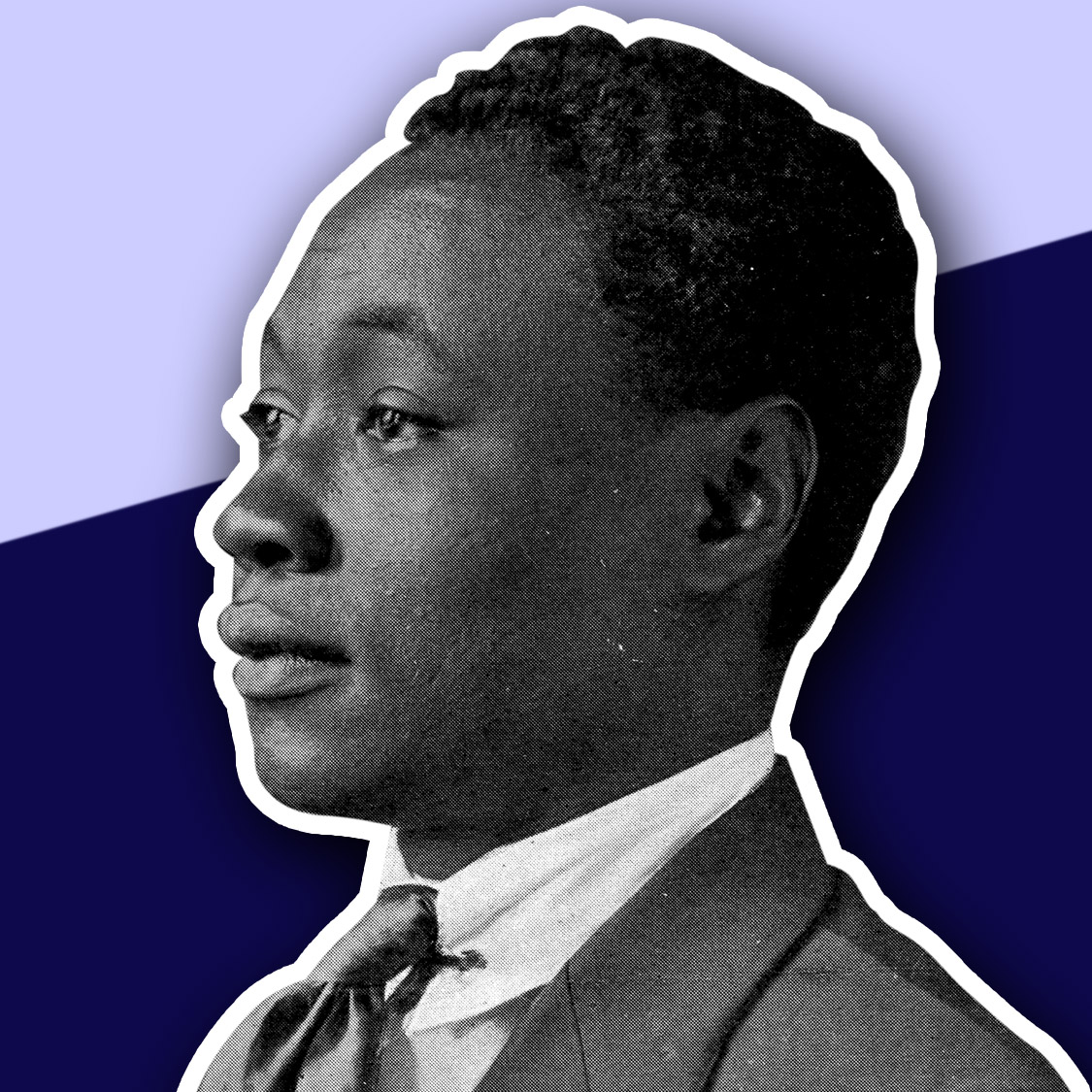
Claude McKay
2021 Icon
Author & Poet
b. September 15, 1889
d. May 22, 1948
“If a man is not faithful to his own individuality, he cannot be loyal to anything.”
Claude McKay was a prominent bisexual Jamaican poet and author who earned international renown during the Harlem Renaissance — an awakening of African-American arts and culture in the 1920s and ’30s. McKay’s writing, which illuminated the Black experience, made a historic impact on the literary world.
Festus Claudius “Claude” McKay was born in Jamaica in 1889 to a family of “peasant” farmers. Educated by his brother, a schoolteacher, and an English family friend who was well-versed in British literature and European philosophy, McKay used his formative experiences as inspiration for his writing and use of Jamaican dialect.
At age 17, McKay moved to Kingston, Jamaica, to earn money as a constable while he worked on his poetry. He left the job soon after, having experienced constant racism in the predominantly white capital city.
McKay returned to his hometown, then moved to London in 1912, where he published his first poetry collections, “Songs of Jamaica” and “Constab Ballads.” The works stood in stark contrast, as “Songs” romanticized Jamaican peasant life, while “Constab” painted a dark portrait of the racism and inequities faced by Black Jamaicans. McKay attended Tuskegee Institute in Alabama, then transferred to Kansas State University. He moved to Harlem, New York, in 1914.
In 1925 “The New Negro,” an anthology edited by Alain Locke, showcased McKay’s writing alongside other gifted Black writers of the Harlem Renaissance. McKay published his first book, “Home to Harlem” three years later. Largely a romantic novel, it also portrayed working-class struggles and McKay’s perspective on life as a Black man in America.
During the 1920s, communist ideology captivated McKay, and he traveled to Russia and France. In France he met two other notable writers, Edna St. Vincent Millay and Sinclair Lewis. In 1933 he wrote “Romance in Marseille,” the fictional account of an enslaved man who, after receiving reparations, moves to Marseille, France, to live in a society that views homosexuality the same as heterosexuality.
Considered his most controversial prose, the novel was nearly lost to history. McKay’s editors deemed it too shocking to release. Penguin Classics finally published it, seven decades after McKay’s death.
McKay returned to Harlem in 1934. He had grown critical of communism and wrote of his disillusionment. He completed “Amiable With Big Teeth: A Novel of the Love Affair Between the Communists and the Poor Black Sheep of Harlem” in 1941, but the book remained unpublished until 2017.
Although McKay never came out publicly, he had relationships with both men and women and found community in New York’s LGBT circles. He died of a heart attack at age 58.