2026 Icons
- Giorgio Armani
- Gabriel Attal
- Alvin Baltrop
- Frieda Belinfante
- Michael Bennett
- Rachel Crandall-Crocker
- Barry Diller
- Ernestine Eckstein
- Laïla El-Métoui
- Edward Enninful
- Andrea Gibson
- Marsden Hartley
- Muhsin Hendricks
- Patricia Highsmith
- Robert Joffrey
- Julie Johnson
- Lani Ka’ahumanu
- King James I
- Calvin Klein
- Abraham Lincoln
- Chris Pappas
- Pauline Park
- Paul Rudolph
- Amber Ruffin
- St. Vincent
- Jessica Stern
- Charles Sumner
- Jewel Thais-Williams
- Karl Heinrich Ulrichs
- Alok Vaid-Menon
- Edmund White
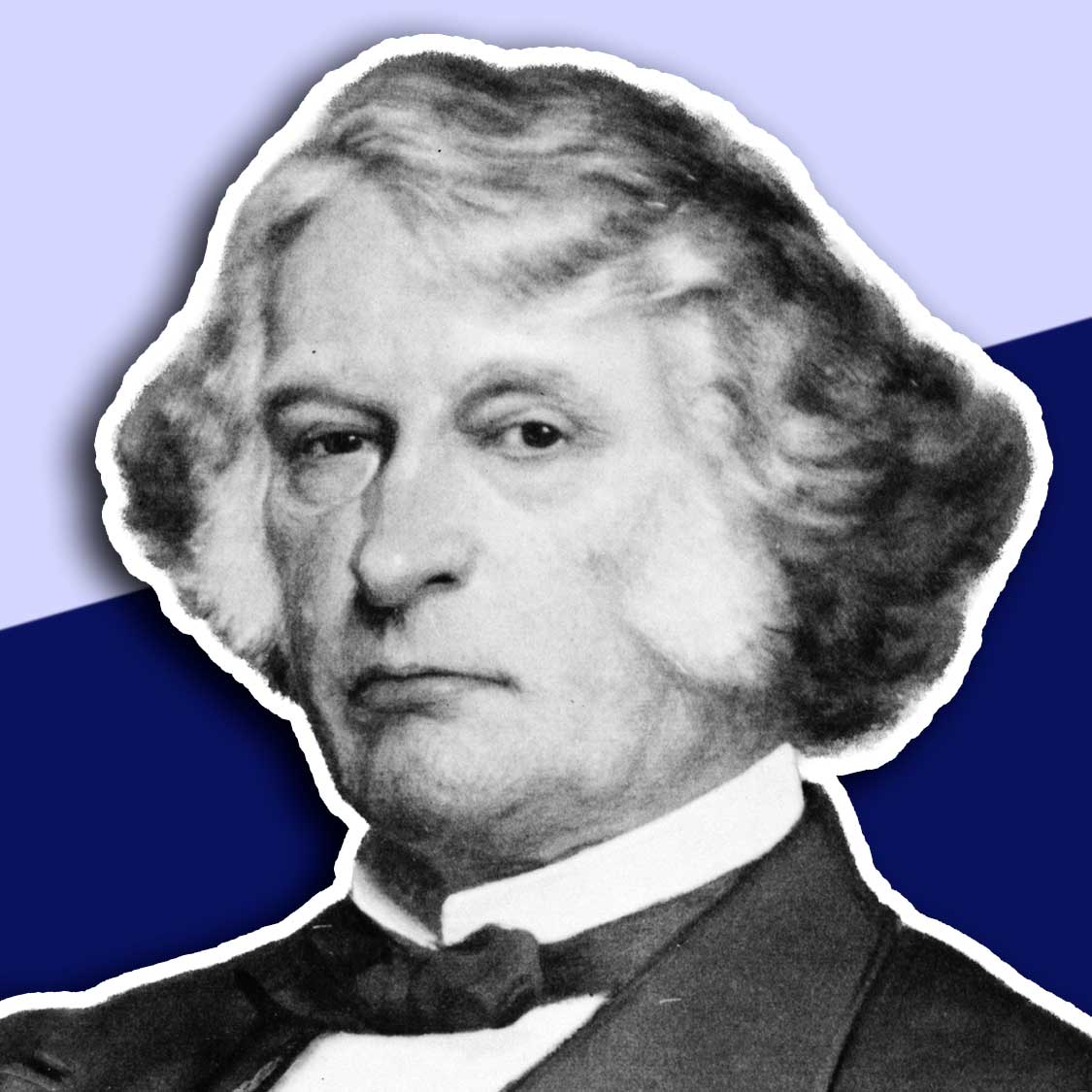
Charles Sumner
2026 Icon
Charles Sumner
19th Century U.S. Senator
b. January 6, 1811
d. March 11, 1874
“No true and permanent fame can be founded, except in labors which promote the happiness of mankind.”
Charles Sumner was a 19th-century Republican senator and prominent abolitionist who promoted Black civil rights, despite fierce opposition.
Sumner was born in Boston, Massachusetts, and graduated from Harvard Law School in 1833. He worked as an attorney before studying in Europe from 1837 to 1840.
As a young man, Sumner and a friend, Samuel Gridley Howe, were extremely close. When Howe married, his wife told him, “Sumner ought to have been a woman and you to have married her.” Howe and his wife burned many letters exchanged between the two men. Scholars speculate that the content could have harmed Sumner’s political career.
Sumner remained a bachelor until his mid-50s, enduring years of derision because of it. He married Alice Mason Hooper in 1866, but the union lasted only two years. He had intimate friendships with men throughout his life.
Elected to the U.S. Senate in 1851, Sumner spoke out against slavery and publicly opposed legislation such as the Fugitive Slave Act and the Kansas-Nebraska Act. After his “Crimes Against Kansas” speech in 1856, in which he denounced the Kansas-Nebraska Act and attacked its co-author, Senator Andrew Butler, Sumner was brutally caned in the Senate chamber by Butler’s relative, South Carolina Congressman Preston S. Brooks. It took years for Sumner to fully recover. The caning became a national cause célèbre for the abolitionist movement.
From 1861 to 1871, Sumner served as chairman of the Senate Foreign Relations Committee. He played an instrumental role during the Civil War, handling diplomatic relations with Britain. After the war, Sumner and Rep. Thaddeus Stevens led the Radical Republicans, a coalition that advocated for civil rights and political restructuring of seceded states. Sumner unsuccessfully proposed that Southern states should be forced to guarantee Black suffrage and equal rights before they rejoin the Union.
Sumner and President Ulysses S. Grant were frequently at odds. In 1869, Grant proposed a plan to annex the Dominican Republic in part as a potential refuge for freed slaves from the South. Sumner delivered another fiery opposition speech, insisting that African Americans deserved to live in the U.S. with their rights protected. After the plan was eventually dropped, President Grant retaliated, engineering Sumner’s removal from the Foreign Relations Committee.
In 1871, the Massachusetts legislature censured Sumner for a small gesture of reconciliation toward the South. The state legislature rescinded the reprimand in 1874. Days after his name was cleared, Sumner suffered a fatal heart attack and died.